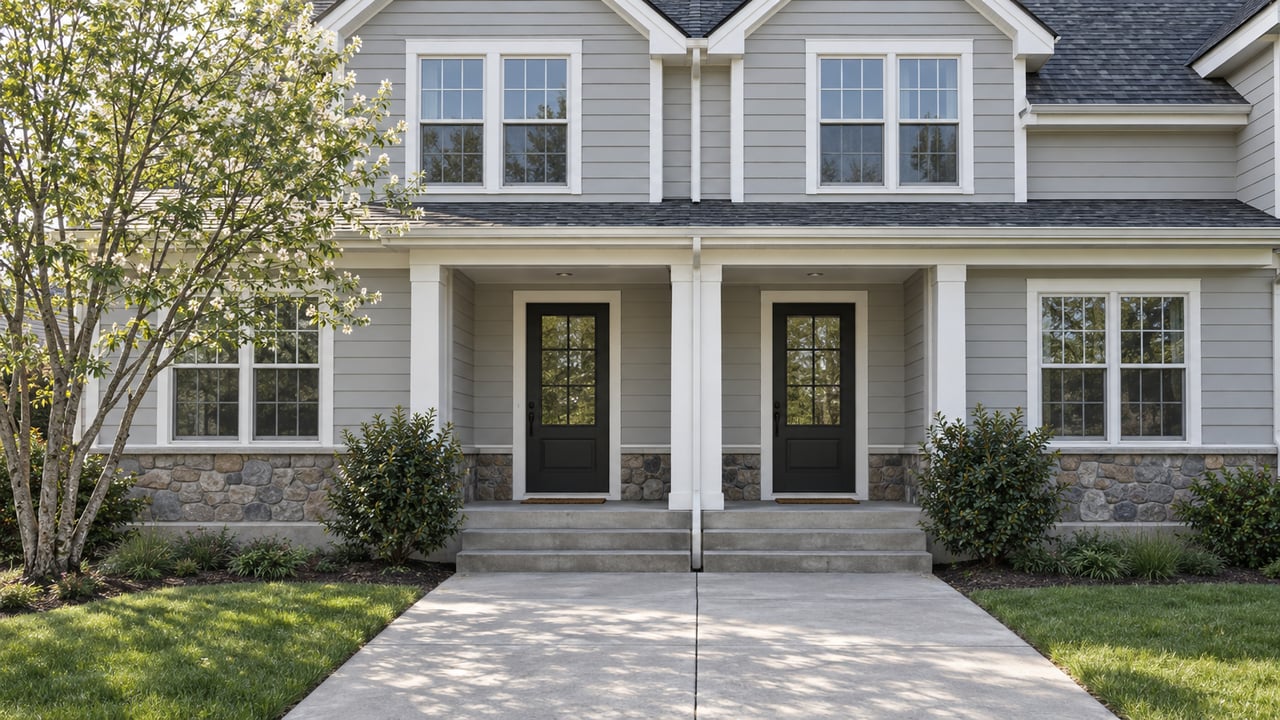
Drive River Road between Canal Street and Bridgeport Avenue this fall and you'll pass more construction fencing than finished landscaping. The Great River Water Club is going up with a mix of 35 condos and 110 apartments. A block over, 740 River Road has cleared 40 side-by-side condo units. Park Royal, approved for 123 Canal Street, is part of the same wave, alongside broader multifamily projects like 453 River Road and River Breeze Commons. Almost every new ownership unit hitting the Shelton market right now sits inside this same half-mile stretch along the river.
New construction, river views, and proximity to the train are part of the appeal. The station's accessibility and ownership costs are also worth considering.
The corridor's train station is not yet ADA-accessible
The train station anchoring this corridor's commuter appeal is Derby-Shelton, the stop on Metro-North's Waterbury Branch. As of now, that station isn't ADA-accessible. Connecticut's Department of Transportation has a $39.7 million project in its 2026-2030 capital plan to build ADA-compliant platforms and improve rider amenities there, but that's a five-year window, not a finished upgrade. Route 8, the other commuting spine most Shelton buyers actually rely on day to day, is also mid-project right now, with CTDOT work underway on resurfacing, bridge rehabilitation, and safety improvements.
None of that means the corridor is a bad bet. It means buyers should weigh the station's current accessibility alongside the timing of its improvements. If you're weighing a premium for proximity to Derby-Shelton, you're paying for a station that, right now, a rider using a wheelchair or a stroller can't easily use, with the fix still working through a multi-year state capital plan.
Comparing established communities and new construction
Move away from the river and Shelton's condo stock looks different, and the numbers are already public in a way new-construction numbers can't be.
Rivendell, a 126-unit community with one- to three-story layouts, garages, and two pools, publishes 2026 common charges ranging from $262 to $544 a month depending on the model, with its own straightforward access to Route 8 and the Merritt Parkway. Stephen's Terrace, an older-stock community, runs HOA dues around $172 to $262 a month, covering grounds maintenance, trash pickup, snow removal, water, property management, and pest control, plus amenities like storage and outdoor tennis courts.
Those are known numbers with a track record behind them. A board that's been collecting dues for years has a reserve history you can request and read. A brand-new building on River Road has a projected budget rather than an audited one. The dues quoted at closing on a new unit reflect year-one assumptions: insurance costs, landscaping contracts, reserve contributions, all set before the building has been through a single Connecticut winter. Established communities like Rivendell and Stephen's Terrace have already operated through the first year, giving buyers a record of how their budgets performed in practice.
That's the trade a lot of buyers skip past when they default to "newer is better." Newer also means less proven, and in a condo purchase the HOA's financial health is as much a part of what you're buying as the unit itself.
The market itself is telling a quieter story than the price alone suggests
Look at how the numbers moved this year and the picture gets more specific. Over the three months ending August 2026, Shelton's median sold price came in at $540,000, down 0.3% from the same stretch last year, with homes selling in an average of 37 days compared to 43 days a year earlier. Sales volume was actually a touch lower too, 130 homes sold in August 2026 against 136 the year before.
Meanwhile, list-side data from September 2026 put Shelton's median asking price at $589,000, or $293 a square foot, with homes spending a median of 25 days on market, matching September 2025.
Those two data points aren't contradicting each other. One measures what buyers actually paid over a rolling three-month window; the other measures what sellers are asking right now. Read together, they describe a market where asking prices haven't needed to climb to keep homes moving fast. That's a market where sellers aren't chasing buyers with price cuts, and buyers aren't waiting around either. Competition here is happening on speed, not on price escalation, which is a different dynamic than "prices are rising" headlines would suggest.
For a buyer choosing between a new River Road unit and an established community across town, that speed cuts both ways. Established units with known, published costs are also moving in that same compressed window, so waiting to see if the new-construction premium comes down isn't a strategy. If the value case is with the older stock, that case needs to be made now, not after another price cycle.
What this actually means if you're comparing units
If commuting by rail out of Derby-Shelton is central to your decision, a useful comparison is between the new corridor today and the corridor after the platform project is completed, sometime in the 2026-2030 window. The project's timing is a factor to consider when pricing an offer.
If your priority is predictable monthly costs, a community with years of history behind its HOA, like Rivendell or Stephen's Terrace, gives you a dues figure that's already been stress-tested against a winter of snow removal and a summer of landscaping contracts. A new building's number is still a forecast.
And if you're comparing square footage and layout against price per square foot, remember that the $293 per square foot figure from September 2026 covers the whole city, new and established alike. A new unit priced at that rate is often smaller than an established one at a comparable price, because land and construction costs on the river corridor run higher than they do further from the water.
None of this argues against the new construction wave along River Road, Canal Street, and Bridgeport Avenue. It argues for pricing the whole picture, not just the finish level, into what you're paying for. A brand-new unit with an unproven HOA and a transit amenity not yet complete isn't automatically worth more than an established unit with a known budget and a station that, ADA gap and all, still runs the same trains today that it will in 2030.
If you're trying to work out what a specific Shelton condo, new or established, is actually worth to own month to month, that's exactly the kind of comparison Scott Wright walks buyers through before they write an offer, HOA history included. Reach out for a market conversation, or start with a free home valuation if you're weighing a sale on the other side of this same corridor.
This article is general information, not legal, tax or financial advice. Consult a qualified professional about your situation.